How Many Carbs in Michelob Ultra

How Many Carbs in Michelob Ultra

We often get questions about this popular light beer and its nutrition. Our goal is to give clear, concise facts so readers can make informed choices.

A standard serving is 12 fluid ounces (354 grams). Each serving contains 95.6 calories and shows low carbohydrate content on the label.

We review the nutritional profile and note that carbs per serving are modest. For full breakdowns and related macro details, see our linked resource for exact grams and context.

Understanding caloric density helps manage daily intake. We present simple numbers and practical notes so you can compare this light option with other lagers.

For more specifics, including carbs per serving and additional macros, consult our detailed post: carb and calorie breakdown.

Understanding How Many Carbs in Michelob Ultra
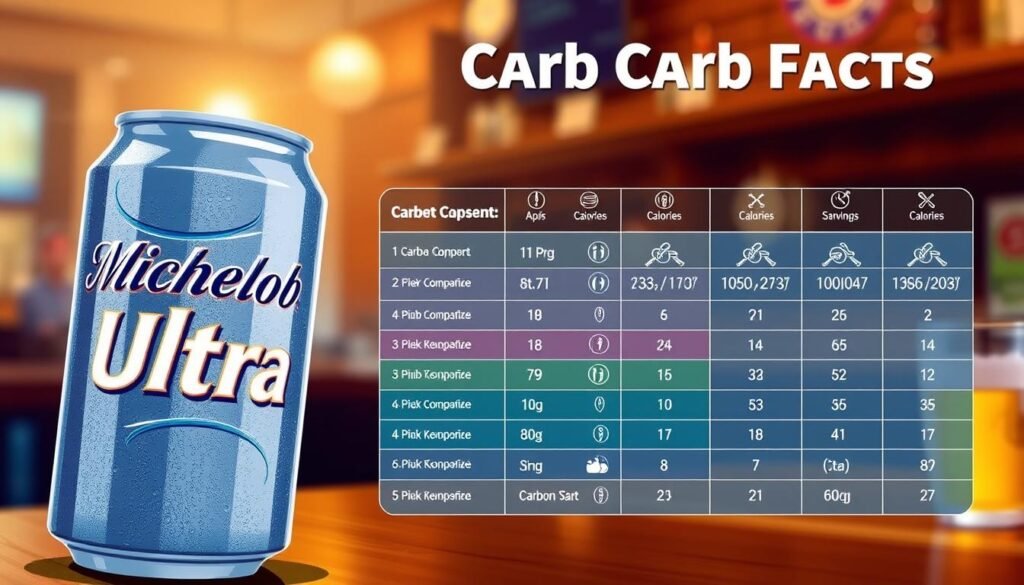
A detailed infographic-style illustration showcasing "Michelob Ultra Carb Facts." In the foreground, prominently feature a sleek, chilled Michelob Ultra beer can with condensation glistening on its surface, angled slightly to show the logo clearly. In the middle ground, display a visually engaging chart or list of carb facts, using vibrant colors and clear icons, indicating key nutritional information like carbohydrate content, calories, and serving size in a clean, minimalist layout. The background should be a soft-focus bar scene with warm ambient lighting that creates a cozy atmosphere. Use a slightly elevated angle to give depth to the composition, ensuring all elements are harmoniously balanced, inviting readers to explore the information in a refreshing context.

We report the exact carbohydrate amount for a standard 12 fluid ounce serving: 2.6 grams. This precise figure helps when you plan meals or track macros.

As a widely known ultra light option, this beer delivers a crisp, low-calorie pour with minimal carbs. That slim carb profile explains why many people choose it while watching daily intake.

  • Low total carbs: 2.6 g per 12 fl oz serving.
  • Crisp, refreshing taste typical of a light lager.
  • Fits well into balanced diets that allow occasional alcoholic beverages.
Serving Size Carbs (g) Category
12 fl oz 2.6 Ultra light lager
24 fl oz 5.2 Double serving

Detailed Nutritional Profile of This Light Lager

Our aim is to show the full nutrition facts for a single 12-ounce serving so you can judge how this light option fits your plan.
A chilled bottle of Michelob Ultra lager prominently displayed in the foreground, showcasing its sleek design and light golden color. Beads of condensation cover the glass, emphasizing its refreshing quality. In the middle ground, an elegantly set wooden table with a rustic feel complements the beer, while an assortment of fresh ingredients, like lime wedges and salt, hint at flavor. The background features a soft, blurred brewery interior with warm, ambient lighting reminiscent of a cozy pub atmosphere. The overall mood is inviting and casual, perfect for a relaxed gathering, illuminated by soft, natural light to enhance the lager’s effervescence. Aim for a focus that captures the essence of light, refreshing drinking experience.

Caloric Content and Macronutrient Breakdown

One serving delivers 95.6 calories and a modest alcohol level of 3.4% ABV. The macronutrient split keeps intake simple and predictable.

  • Protein: 0.6 grams per 12 fl oz serving.
  • Fat: 0 grams, so no dietary fat comes from this pour.
  • Carbohydrates: low per serving, which helps explain the modest calorie count.

Micronutrient and Mineral Composition

There are measurable minerals that add small nutritional value to this beer. These can matter when tracking electrolytes or daily micronutrient totals.

Nutrient Amount (per 12 fl oz)
Potassium 60.2 mg
Phosphorus 28.3 mg
Magnesium 14.2 mg
Alcohol by volume (ABV) 3.4%

Incorporating This Beer Into Your Dietary Goals

Choosing a low-carb beverage at a social event can help keep daily goals on track. We recommend planning drinks the same way we plan meals: account for every gram so totals stay below targets.
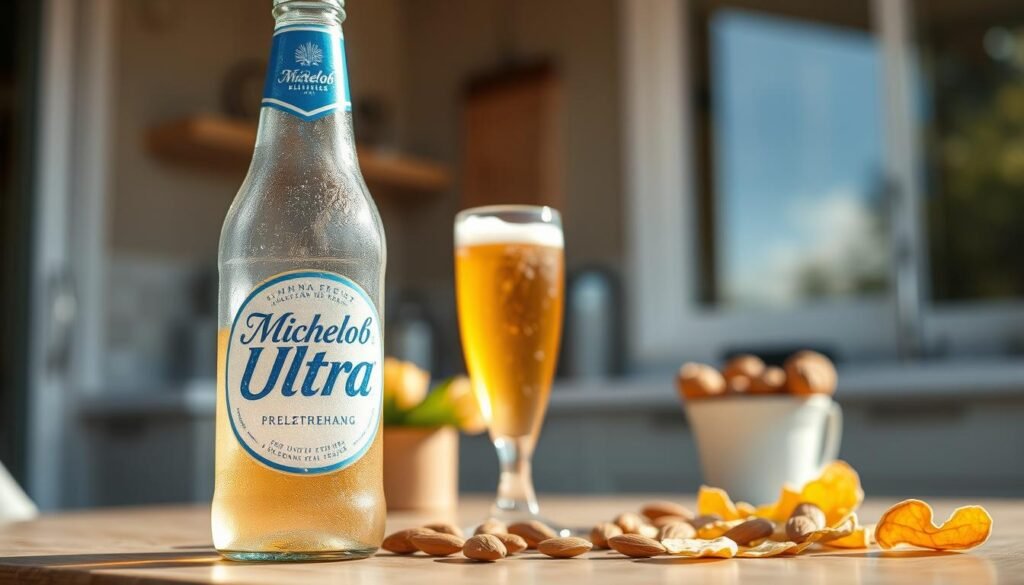
A chilled Michelob Ultra beer bottle sits prominently in the foreground, glistening with condensation to emphasize its refreshing qualities. The bottle's label should be clearly visible, showcasing its distinct blue and white branding. In the middle ground, a stylish glass filled with the beer captures the light, highlighting the golden hue and fine carbonation bubbles. Surrounding the glass are healthy snacks like almonds and quinoa chips, subtly reinforcing a health-conscious theme. The background features a well-lit kitchen or outdoor patio setting, with soft, natural light filtering through, creating an inviting atmosphere. The overall mood is warm and relaxed, ideal for enjoying a refreshing drink while keeping dietary goals in mind. The composition should be shot from a slight overhead angle to capture both the bottle and glass beautifully, ensuring clarity and focus.

Considerations for Ketogenic Lifestyles

For those following a ketogenic lifestyle, daily carbohydrate intake should stay at or below 30 grams. One 12-ounce serving of this light beer contains just 2.6 grams of carbs, so it can fit within that limit when tracked.

Protein and fat are minimal—0.6 grams of protein and 0 grams of fat per serving—so the beverage won’t shift your macro ratios much. Still, we stress careful tracking; each gram counts toward the 30-gram cap.

  • Fits a keto plan if total daily carbs remain under 30 grams.
  • Low carb per serving makes it a common choice for nutritional ketosis.
  • Moderation is key; alcohol can affect blood sugar and appetite.
Serving Size Carbs (g) Protein / Fat (g)
12 fl oz 2.6 0.6 / 0
24 fl oz 5.2 1.2 / 0
Daily keto cap ≤30 Varies

Final Thoughts on Choosing a Low Carb Beverage

We close by noting that a well-chosen light beverage can support both social plans and nutrition goals.

Choosing a light beer lets us enjoy a drink while keeping calories and carbs low. One serving provides 2.6 grams of carbs, 0.6 grams of protein, and 0 grams of fat, so it fits many plans when tracked.

Balance matters: match drink choices to your daily activity and calorie targets. For more on alcohol strength and related details, see our linked resource on alcohol content details.

We hope this concise guide helps you make an informed pick for your next social pour.

FAQ

What is the carbohydrate count for a standard 12-ounce bottle of this light lager?

A 12-ounce serving of this ultra light lager contains about 2.6 grams of carbohydrates. That low carb amount helps explain why many choose it when they want fewer carbs and calories from beer.

How many calories and grams of protein are in a 12-ounce pour?

The typical 12-ounce pour has roughly 95 calories and less than 1 gram of protein. Fat is negligible, and the beverage is primarily water, alcohol, and fermentable carbs that remain after brewing.

Will drinking this beer fit into a low-carb or reduced-calorie plan?

Yes. Because the carb and calorie counts are low compared with regular lagers, it can fit into many reduced-carb or calorie-controlled plans when consumed in moderation. We recommend tracking total daily intake and limiting portions.

Is this beer suitable for a ketogenic diet?

For many people following a ketogenic approach, a single 12-ounce serving may be acceptable without disrupting ketosis, but tolerance varies. We advise testing blood ketone response and keeping servings small to stay within daily carb limits.

Are there any notable vitamins or minerals in this lager?

This light lager provides minimal micronutrients. It contains trace amounts of B vitamins from yeast and small amounts of sodium and potassium, but it should not be relied on as a nutrient source.

How does this ultra light beer compare to regular lagers for carbs and calories?

Compared with standard lagers, this ultra light option has substantially fewer carbs and calories—often half or less—because of lower residual sugars after fermentation and deliberate recipe adjustments to reduce calories.

Does the alcohol content affect carbohydrate values?

Alcohol content impacts calories but not carbohydrate totals directly. During fermentation, sugars convert to alcohol; the remaining carbs determine the listed carb value, while alcohol contributes additional calories.

Can people with diabetes include this beverage in their meal plan?

People with diabetes can sometimes include a low-carb beer in meal plans, but individual responses vary. We recommend consulting a healthcare provider and monitoring blood glucose when introducing alcoholic beverages.

Are flavored or seasonal versions higher in carbs?

Flavored or specialty variants often contain added sugars or different recipes that raise carbohydrate and calorie counts. Always check the label for specific nutrition facts rather than assuming parity with the standard formula.

Similar Posts

Leave a Reply

Your email address will not be published. Required fields are marked *