Miller Lite vs Michelob Ultra
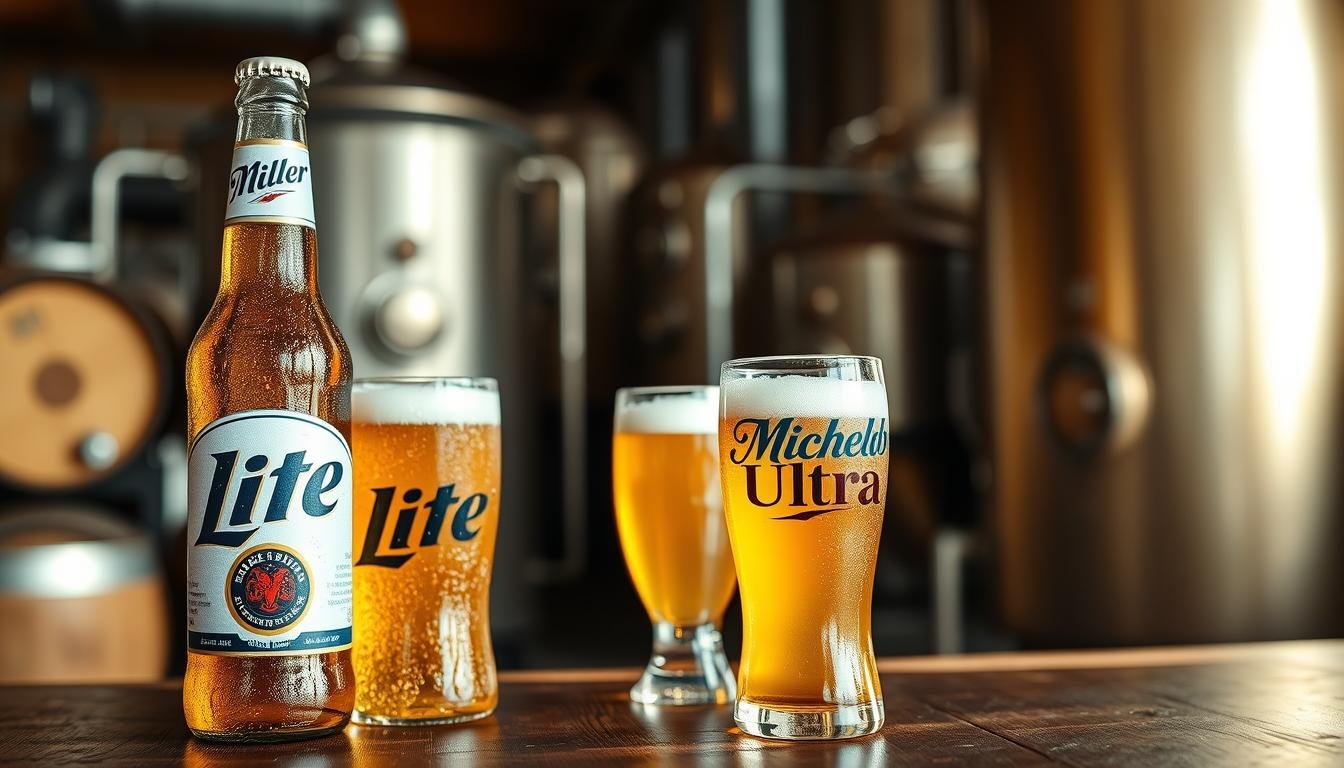
We open with a clear look at two leading light beer choices and why they matter today. Introduced nationally in 1975, one brand shaped early demand for lower-calorie beer. The other arrived in 2002 as a fitness-focused option under a major family of brands.
Light beer now makes up over 45% of U.S. beer sales, and many people pick a pour based on calories, carbs, and taste. We explore how serving size, water and brewing methods affect flavor and alcohol balance.
Our analysis helps you weigh price, availability at events, and whether a bottle or draft fits your lifestyle. Over the years these products have influenced market share and growth among drinkers who value lower calories and fewer carbohydrates.
We aim to guide your choice with clear facts on nutritional content and real-world factors that shape purchases across regional markets.
The Evolution of Light Beer in America
Light beer has transformed from a niche option into a dominant shelf choice across U.S. markets. By 2025, light offerings account for over 45% of total sales, and people pick pours based on calories and carbs as much as taste.
Regulations require a light label to have at least 25% fewer calories than a brewery’s regular beer. Brewers achieve this with extended fermentation and specialized yeast that break down complex sugars into simpler forms.
- Major brands like bud light and coors light held leadership for years, shaping consumer expectations (bud light: 110 calories; coors light: ~102 calories).
- The craft movement pushed innovation, prompting new light beers across regional markets.
- Modern production targets lower alcohol (around 3.2%–4.2%) to reduce calories per serving.
- One premium brand positioned itself around active lifestyles, highlighting fewer carbs and smart marketing.
We see a clear shift: people now prioritize lower calories and carbs. That shift created a market where light beer represents nearly half of all beer sales today.
Comparing Miller Lite vs Michelob Ultra Brand Identities
Each label took a different path to claim its place in the light beer market. We examine how history and marketing shape how people view taste, calories, and lifestyle around these pours.
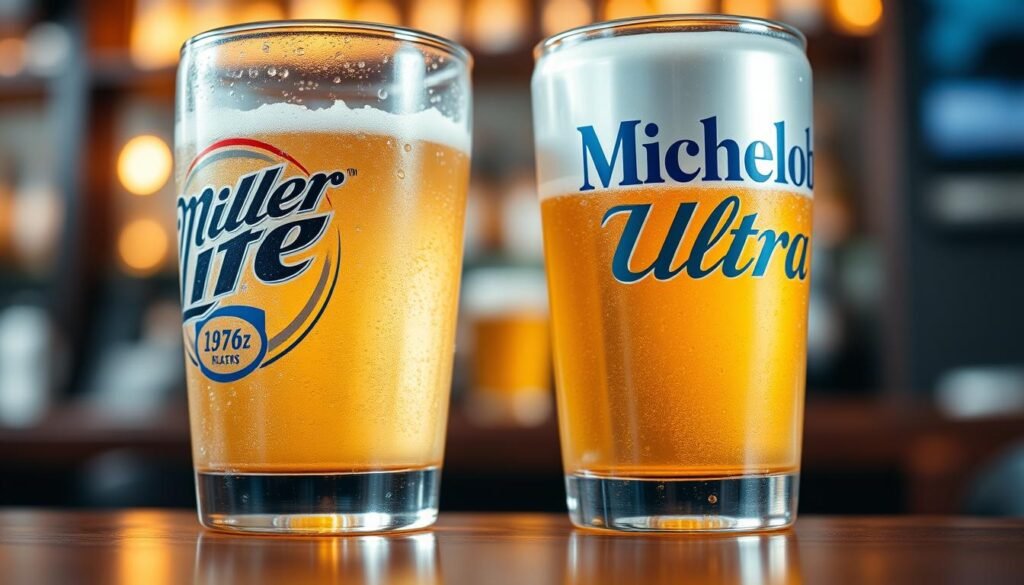
Historical Origins
One brand began in the early 1970s as Meister Brau Lite, then rolled out nationally in 1975. That origin helped it become a pioneer in the light beer category.
The other arrived decades later and was built around a fitness-focused message. Its launch emphasized fewer calories and carbs to attract active consumers.
Brand Positioning
We see clear, different approaches. The veteran brand highlights malt character and drinkability with a long-standing slogan that promises great taste and less filling feel.
- The fitness-focused label positions itself as a “better for you” option under a major brewery family.
- Both brands target drinkers who want lower calories without giving up social rituals around beer.
- Bud Light still looms as a competitor, but these brands hold distinct niches in the U.S. market.
Nutritional Breakdown and Ingredient Profiles
A side-by-side look at calories, carbs, and ingredients shows where small differences can matter. We focus on 12-ounce serving data and how brewing choices shape the totals.
Calorie and Carbohydrate Comparison
In our comparison, miller lite lists 96 calories and 3.2 grams carbohydrates per 12-ounce serving. Michelob Ultra shows 95 calories and 2.6 grams carbohydrates for the same size.
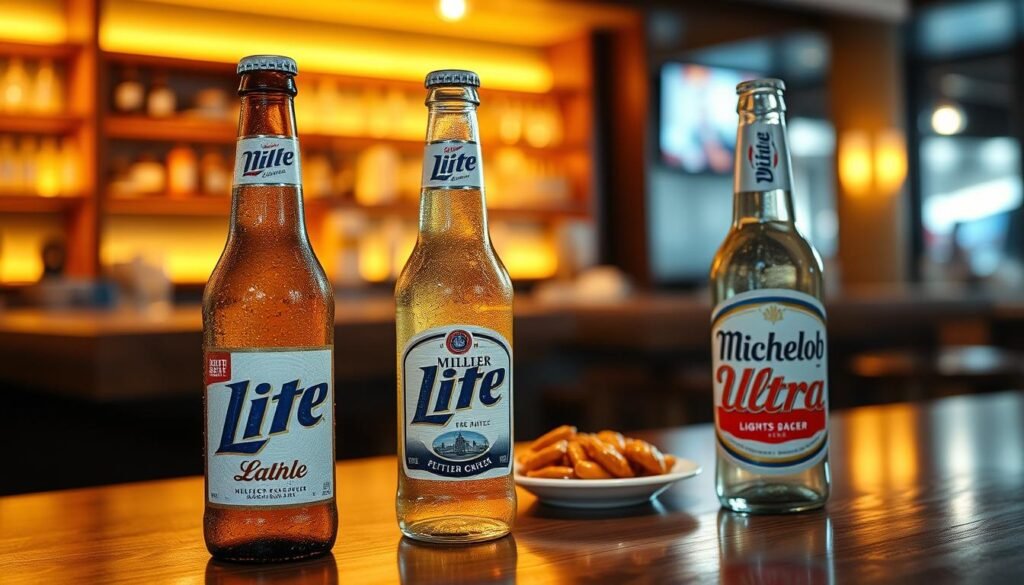
| Brand | Calories (12 oz) | Grams Carbohydrates |
|---|---|---|
| miller lite | 96 | 3.2 |
| michelob ultra | 95 | 2.6 |
| bud light / coors light | 110 / 102 | ~3–4 |
- Michelob Ultra has a slight edge in calorie and carb reduction compared to miller lite.
- Light beers usually range from 2.6 to 7 grams carbohydrates per serving.
- Brewers use enzymes to break complex sugars into simpler forms, lowering grams carbohydrates without losing body.
- Alcohol (around 4.2%) also adds to the calorie profile for these beers.
Understanding specific grams and calories helps us choose a light beer that fits our fitness goals and taste priorities.
Analyzing Taste and Mouthfeel Differences
Flavor balance and carbonation are what set these two light options apart at the glass.
We find that miller lite shows a hint of malt that gives a fuller mouthfeel. That slight body makes the beer feel more substantial to many drinkers.
By contrast, michelob ultra leans toward a very clean, crisp profile. Its lightness can read almost like effervescent water when served ice cold.

- The grain bill and hop choices help preserve subtle flavors even in low-calorie brews.
- Carbonation level is crucial; proper fizz lifts aroma and refreshes without weighing down the palate.
- Some craft drinkers say extreme lightness sacrifices flavor complexity.
- Natural flavors can boost character while keeping carbs and grams low.
| Feature | Fuller Light | Ultra-Crisp Light |
|---|---|---|
| Malt presence | Noticeable | Minimal |
| Mouthfeel | More substantial | Thin, effervescent |
| Best use | Casual drinking, social pours | Hot days, active moments |
Overall, our read is simple: pick the light beer that matches how you want to feel while drinking. If you want more malt and balance, choose the fuller option. If you want crisp refreshment with minimal calories and carbs, the ultra-crisp pour fits better.
Market Performance and Consumer Trends
Sales data and consumer habits now tell a clear story about which light beer brands lead the market. We look at momentum, who is buying, and why low-calorie positioning matters for long-term growth.
Sales Momentum
Recent tracking shows a notable rise in premium light beer sales. In September 2025, michelob ultra reached the top spot in U.S. beer rankings, overtaking some long-time leaders.
This growth ties to focused campaigns that highlight calories, carbs, and active lifestyle benefits. Light beer sales overall have held steady even as other beer categories slowed.
Demographic Appeal
Young, fitness-minded people and urban professionals have shifted buying patterns toward lighter pours. Marketing that emphasizes calorie control and lower carbs resonates with these drinkers.
At the same time, miller lite retains a loyal base drawn to consistency and a familiar taste. Together, these trends explain why light beer remains a large part of total sales and share over time.
| Metric | Leading Option | Impact |
|---|---|---|
| Recent Peak | michelob ultra | Top U.S. sales in Sept 2025 |
| Consumer Focus | Low calories / low carbs | Drives purchase decisions |
| Legacy Loyalty | miller lite | Stable market share |
Best Practices for Serving and Storage
Proper serving and storage make a big difference in how light beer tastes and performs. We store cans and bottles in cool, dark conditions between 35°F and 40°F to keep freshness and aroma intact.
Use a pilsner or tall narrow glass to preserve carbonation and focus the aroma. Pour gently at a 45° angle, then straighten to form a one-inch head that holds effervescence and scent.
Light beers hold peak quality for about 90–120 days from packaging. Cans protect against UV light and skunking better than clear bottle packaging, so we recommend cans for longer storage.
| Feature | Recommendation | Benefit |
|---|---|---|
| Temperature | 35–40°F | Best refreshment on serving |
| Shelf life | 90–120 days | Optimal flavor and aroma |
| Packaging | Cans over clear bottle | Protects against light damage |
- Rotate inventory to control price and ensure fresh product for events.
- Monitor carbs and grams per serving when planning pours for guests.
Choosing the Right Light Beer for Your Lifestyle
Our choice depends on what we value most: flavor or strict nutrition. If taste and a touch of malt matter, consider miller lite for a familiar, balanced pour.
If keeping calories and carbs as low as possible is your goal, michelob ultra fits a fitness-focused routine with minimal grams per serving.
Both beers are widely available in the U.S. market, so convenience is rarely a deciding factor. For different balances of flavor and nutrition, try bud light or coors light or explore craft light beers for unique flavors.
Ultimately, pick the light beer that matches your goals — whether that is taste, calorie control, or brand loyalty — and enjoy the serving that fits the occasion.